
CUBY45 – Precision Meets Portability
The CUBY45 is not just another mount — it’s a new standard for modern astrophotography. Designed for demanding users who expect uncompromising tracking accuracy, smart engineering, and real-world usability, the CUBY45 combines compact form, high payload capacity, and future-ready upgradeability — all in one powerful platform.
At its core lies our innovative, ultra-precise full friction-drive system — delivering buttery-smooth, completely backlash-free motion that rivals the performance of top-tier harmonic mounts. At the same time, it preserves the stability, balance, and proven reliability of a classic counterweight-based design.
This is precision you can trust. This is the performance you can see in every exposure.
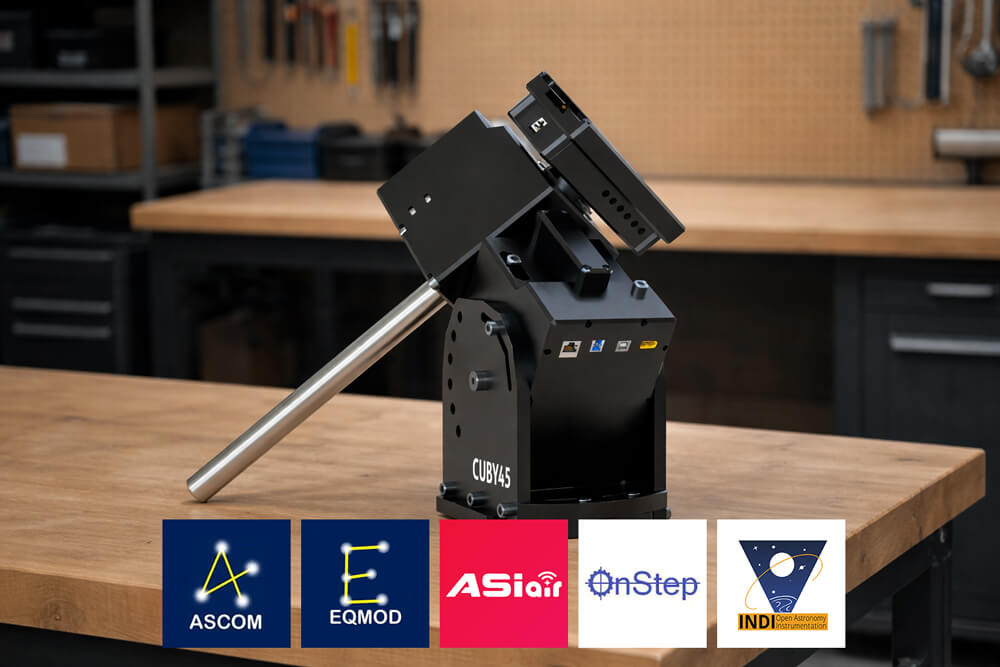
Flexible Control, Today and Tomorrow
Different users have different preferences—and CUBY45 is designed to support them all. It offers compatibility with a proven control system for immediate, hassle-free integration, while also being fully prepared for a next-generation control architecture. This ensures a smooth transition as your setup evolves over time.
You have the freedom to choose the control approach that best fits your workflow—whether it’s a widely adopted standard like EQMOD or a more advanced system such as OnStep. At this stage, CUBY45 allows full flexibility in selecting and integrating your preferred control solution, giving you complete control over your setup. The CUBY45 Ultra model is designed to operate exclusively with OnStep, unlocking its full high-precision capabilities.
Regardless of the control system used, our unique drive technology delivers the same exceptional level of tracking precision.
Key features for Cuby45
- High precision tracking
Engineered to deliver excellent tracking performance straight out of the box, CUBY45 handles demanding imaging setups with ease. At its core is our innovative, ultra-precise full friction-drive system, ensuring completely backlash-free operation and exceptionally smooth motion.
This advanced design provides buttery-smooth tracking performance that rivals top-tier harmonic mounts, giving you the precision and reliability required for high-end astrophotography.
- Up to 45 kg payload capacity
Despite its compact form, the CUBY45 supports 45 kg payload, making it ideal for medium to large astrophotography setups.
- Compact & Lightweight design
Designed for both observatory and field use, the CUBY45 offers a portable yet robust construction, built from high-quality aluminum components.
- Full internal cabling and homing sensors included
Say goodbye to cable clutter. The mount includes integrated internal routing for power and data connections, improving reliability and ease of setup. Integrated homing sensors allow for automated positioning and repeatable startup alignment, essential for remote and robotic observatories.
- Upgradeable by Design
The CUBY45 platform is built with the future in mind. All versions are hardware-ready for encoder upgrades, allowing you to expand your system without replacing the mount.
- Smart Electronics & Connectivity
CUBY45 is built for seamless integration into modern astrophotography workflows. Fully compatible with the ASCOM ecosystem, it ensures effortless connection with a wide range of devices and software. Its future-ready architecture is designed to support upcoming advanced control systems, making it a reliable platform for both current and evolving setups.
Three versions to fit your needs
CUBY45 Lite
Affordable entry into high-precision tracking
- Affordable entry into high-precision tracking
- Aluminum construction with cost-optimized design
- Lightweight covers made from durable 3D carbon-printed material, with an option for full aluminum construction available upon request
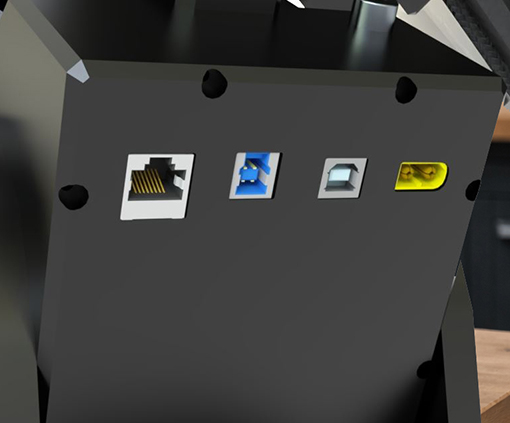
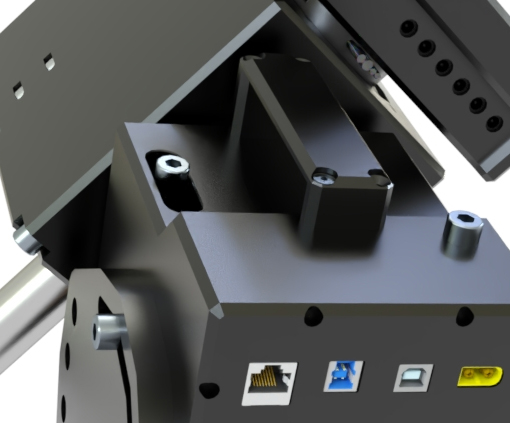
- The mount’s main interface includes a USB 2.0 port for mount control and an XT60 connector for reliable 12V DC power input.
- Fully prepared for future upgrades
CUBY45 Pro
Advanced portable and semi-permanent setups
- Includes everything from the Lite version, plus:
- Full aluminum construction for maximum rigidity
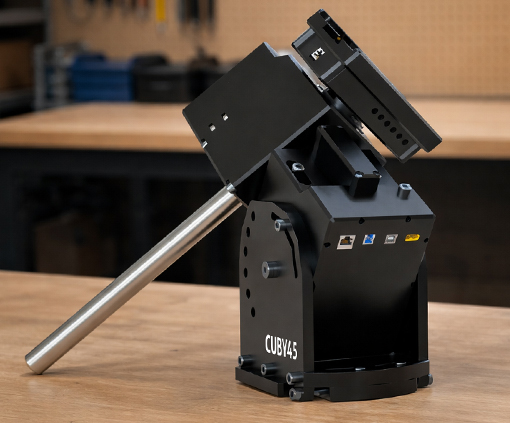
- The mount’s main interface includes a UTP (Ethernet) port for internet connectivity, a USB 3.0 port for high-speed data transfer, a USB 2.0 port for mount control, and an XT60 connector for reliable 12V DC power
- The Vixen/Losmandy saddle features a built-in smart ASCOM DC/USB hub for clean and efficient cable management. It also includes an additional USB 2.0 port for mount control and a UTP (Ethernet) connection for internet access
- Cleaner setup with significantly fewer external cables
- Ideal for advanced portable and semi-permanent setups
CUBY45 Ultra
Designed for demanding astrophotography
- Includes everything from the Pro version, plus:
- Equipped with high-resolution absolute encoders on both RA and DEC axes for ultra-precise tracking and positioning.
- Delivers maximum tracking precision and performance
- Designed for demanding astrophotography and remote observatories
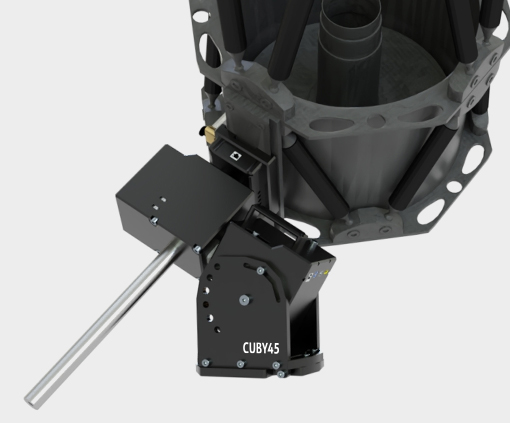
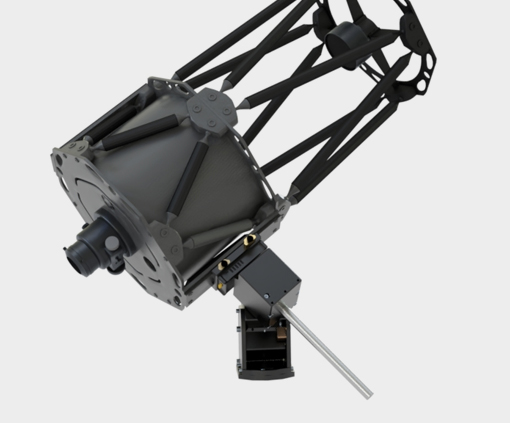
The friction drive also called a roller drive, consists of a small diameter roller pressed against a large diameter disk. The main philosophy of this drive system is very simple, a small-diameter roller rotates a large-diameter disc, and this allows us to use a large gear ratio, for example, 1:500, also more.
But simple philosophy requires precise material selection, the final touch gives us very precise machining for all mechanical parts in the drive system.
The friction drive has zero backlashes, this drive system does not have a periodic error, or it is very small, and because there are no traditional gear teeth, the stiffness is very high, many times stiffer than any other gearing system. In this friction drive system, no lubrication is needed, the efficiency is overall very high, and the tracking itself is very smooth.
Achieving sub-arcsecond level tracking precision is not just a promise but a reality with our friction drive system. Free from the complexities of encoders and elaborate electronic setups, our technology provides a direct and efficient solution for astronomers who prioritize precision without compromising simplicity. Say goodbye to the challenges associated with intricate electronics and software—our friction drive system empowers you to focus on the beauty of the cosmos rather than navigating technical complexities. The absence of encoders doesn’t hinder performance; instead, it enhances the reliability and ease of use of our system.
Overall, the mount-based of the friction-based drive is extremely precise in pointing, too. It’s crucial to note the significant advancements in recent blind plate solving solutions. These software-based solutions, often freely available, have the capability to achieve sub-arcminute level positioning swiftly, without requiring substantial investments. This allows for enhanced accuracy and efficiency in astronomical observations within minutes.
In the realm of telescope mounts, particularly in higher price ranges, the prevalent trend involves reliance on encoders. This is often necessitated by mechanical imperfections in the drive system, requiring encoders for accurate tracking and position monitoring. However, the use of encoders contributes significantly to the overall cost of these mounts.
Precise encoders themselves come with a hefty price tag, sometimes reaching a few thousand euros for just one. Additionally, specialized electronics and software are essential for constant correction calculations. While mounts equipped with encoders indeed offer sub-arcsecond level tracking precision, this comes at a considerable cost.
The Twinstar team has developed a unique drive system that achieves the highest precision without relying on expensive and vulnerable encoders and electronics. This innovative solution ensures accuracy without compromising on cost or durability.
Our telescope mount consistently delivers exceptional tracking precision, maintaining an accuracy of 0.5 arcseconds for an unlimited duration, with minimal deviation. This level of precision ensures that your observations and astrophotography sessions are highly reliable, even over extended periods.
We recommend using longer exposure times or implementing a variable exposure delay in PHD guiding software. This approach allows the guiding system to average out seeing conditions and reduce the impact of short-term atmospheric disturbances.
Seeing Conditions: It’s important to note that seeing conditions—the atmospheric turbulence that can blur astronomical images—are typically the primary factor affecting tracking precision. Even with our highly accurate tracking capabilities, the quality of your observing location and the current seeing conditions will significantly influence your results.
A typical PHD guide graph made with an FG80 mount loaded with 50 kg (telescope tube + counterweights) under moderate seeing conditions would show relatively consistent guiding with some fluctuation, primarily due seeing conditions.
In most observing scenarios, particularly if you’re not at a location with excellent seeing conditions, you will find that our mount’s tracking precision far exceeds the demands of your observations or astrophotography.
By following these guidelines and taking advantage of the mount’s precision, you can achieve outstanding results, even under challenging conditions.
A practical hint for determining the Minimal Guide Scope Focal Length
The Minimal Guide Scope Focal Length refers to the shortest focal length that a guide scope should have to ensure accurate guiding during astrophotography or tracking. This is important because the guide scope needs to accurately detect small movements of a guide star to keep the main telescope focused on the target.
Where:
- Main Telescope Focal Length is the focal length of your primary imaging telescope (in mm).
- Guider CCD Pixel Size is the pixel size of the camera used in your guide scope (in microns).
- Main CCD Pixel Size is the pixel size of the camera used in your main telescope (in microns).
This calculation ensures that your guide scope can detect small enough deviations in star position for accurate guiding.
Main Telescope Focal Length (mm)
Guider CCD pixel size (µm)
Main CCD pixel size (µm)
| Drive system | Friction |
| Payload | 45 kg |
| Counterweight holder shaft diameter: | 30 mm / we can reduce the shaft diameter for your weights, for example, to 28 mm, if needed. |
| Tracking precision | +/- 0.5 arcsec for unlimited time |
| Control system | ASCOM / INDI / ASIAIR compliant |
| USB/DC hub | ASCOM / 2xUSB3.0 – 5V 2.5A / 4xUSB2.0 – 5V 2.5A/ 6 x DC12V/6A/5.5×2.1 / PWM1-2 / Temp. & Hum. environment Sensor |
| Homing Sensors | Yes |
| Pointing accuracy | +/- 5 arcmin |
| Typical PE (Arcsec RMS) | 0 |
| Weight | 15 kg + 1 kg counterweight holder shaft |
| Power | 12V, max. 10A |
| Maximum GoTo current | max. 1.5A |
| Latitude range | 0°–90° |
| Azimuth adjustment | ±15° for precise polar alignment |
| Used material |
Anodized aluminum and stainless steel |