

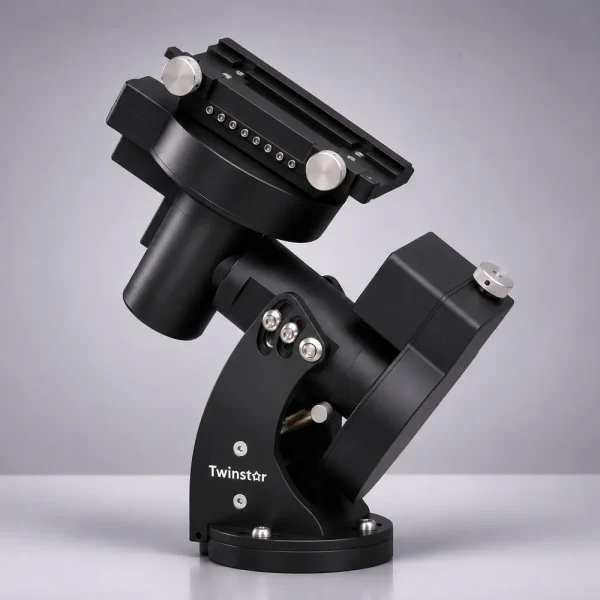
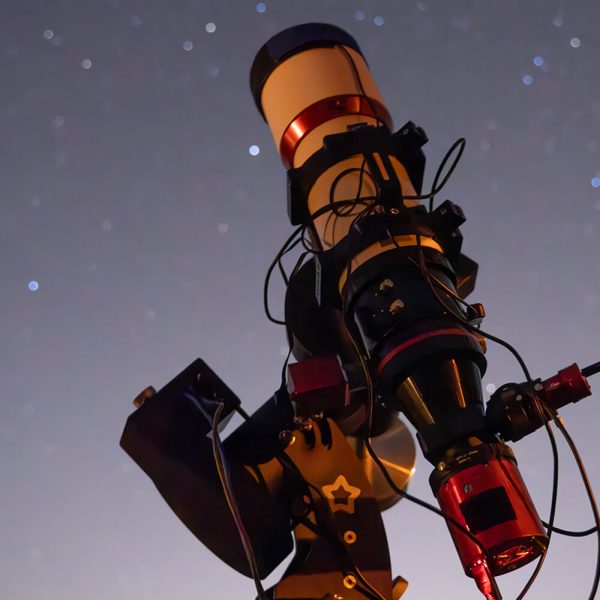
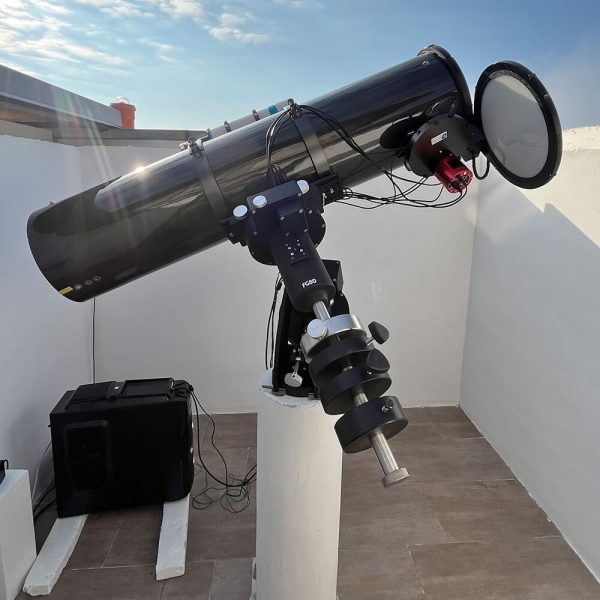
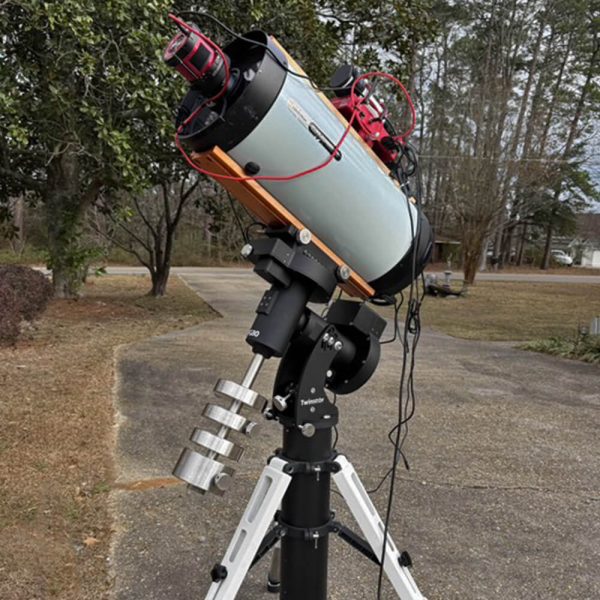
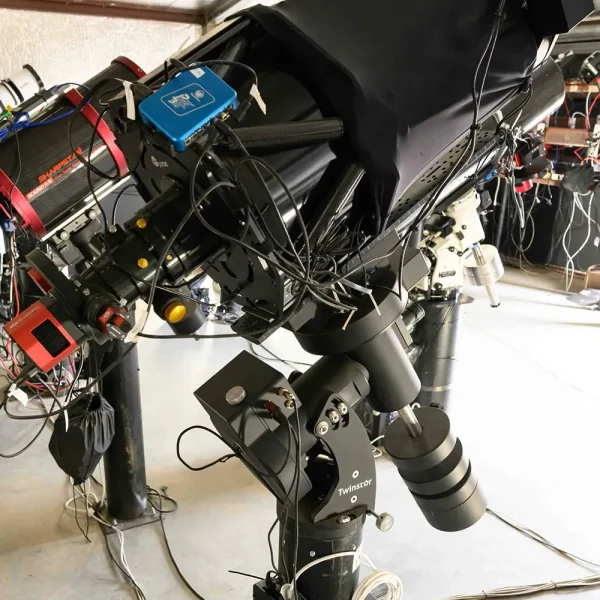
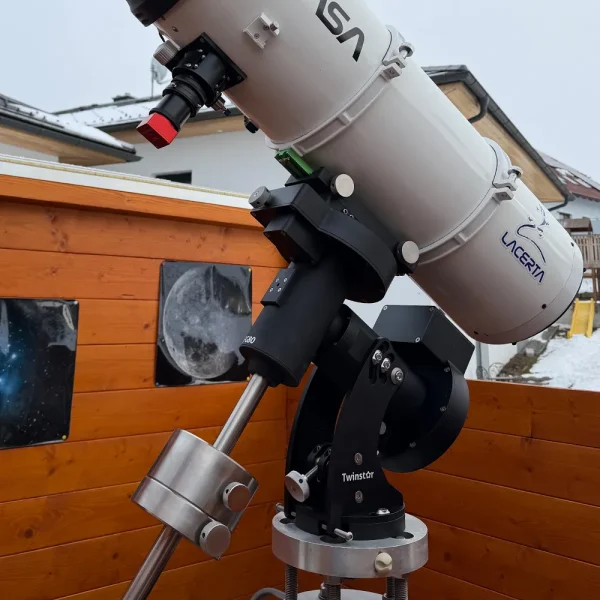
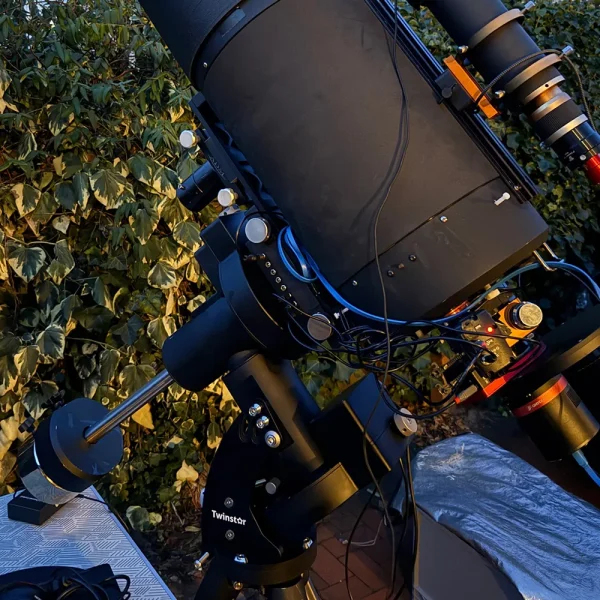
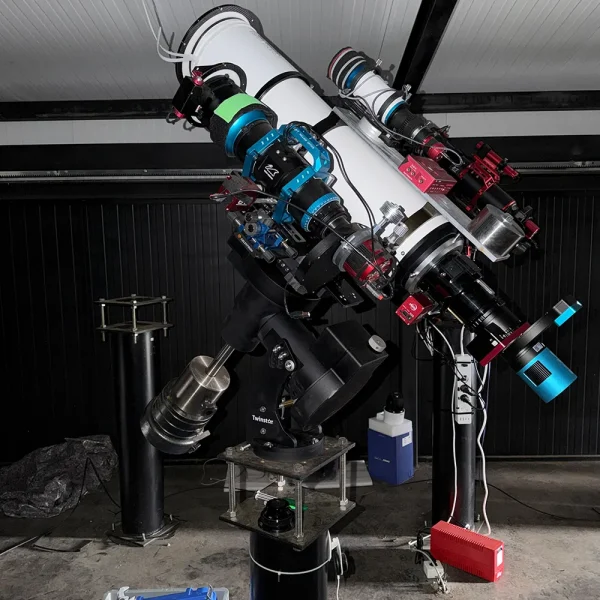
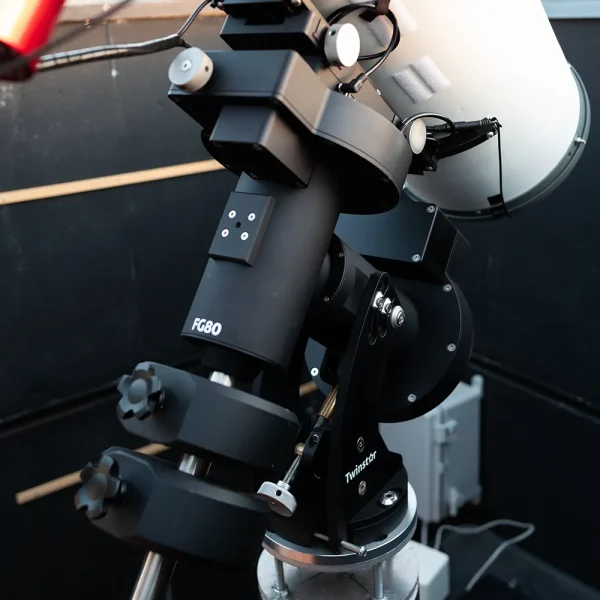
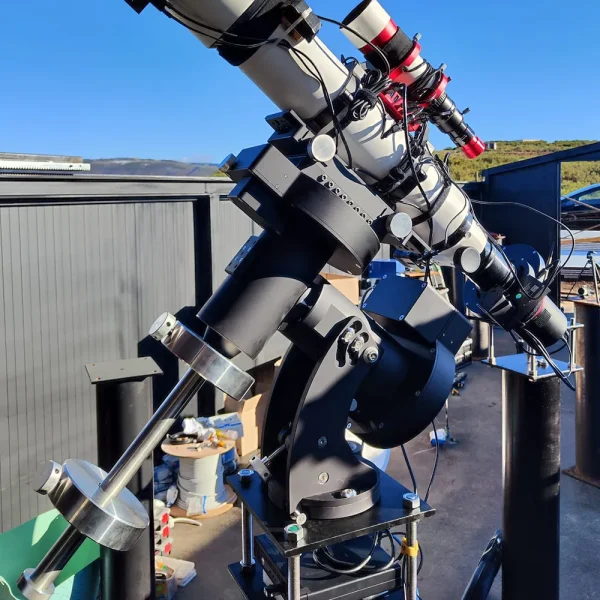
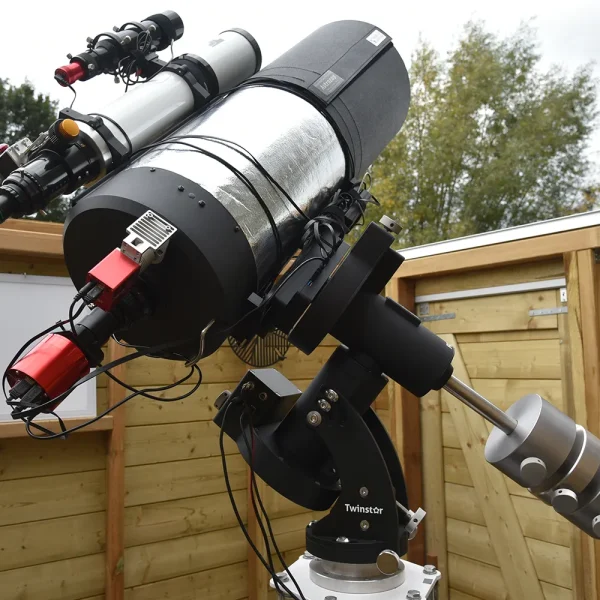
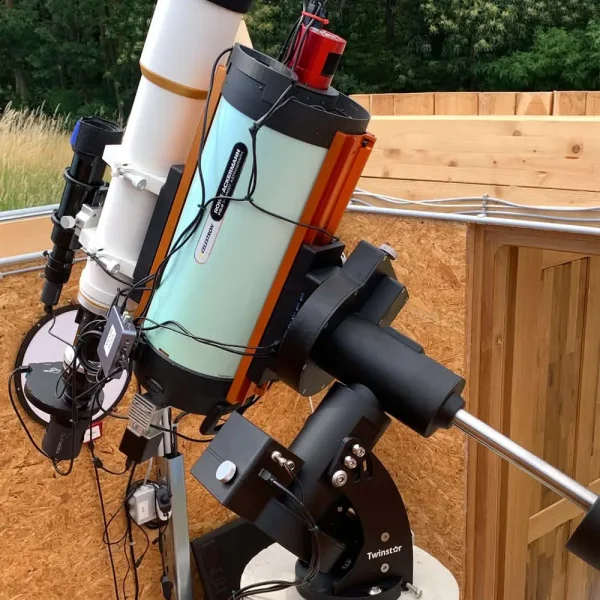
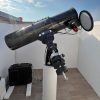
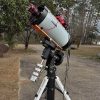
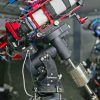
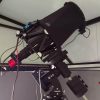
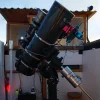
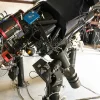
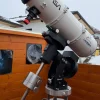
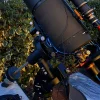
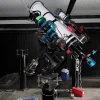
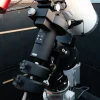
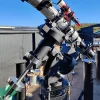
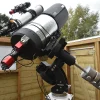
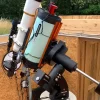
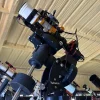
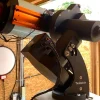
Twinstar FG80 – High-Precision Friction Drive Equatorial Mount
Professional Telescope Mount for Demanding Astrophotography
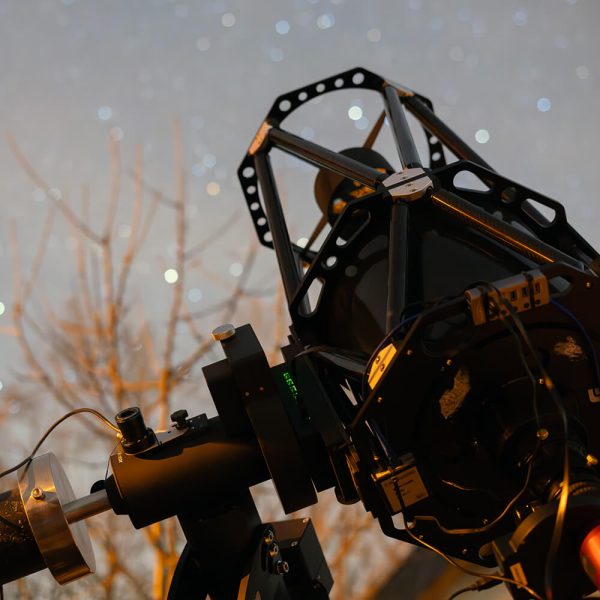
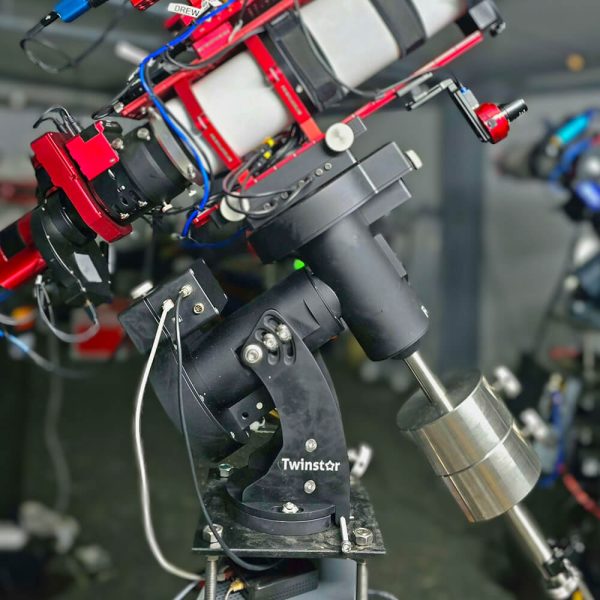
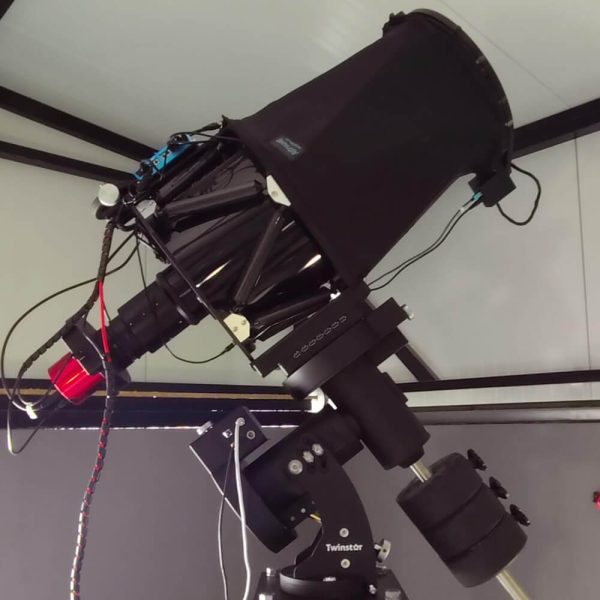
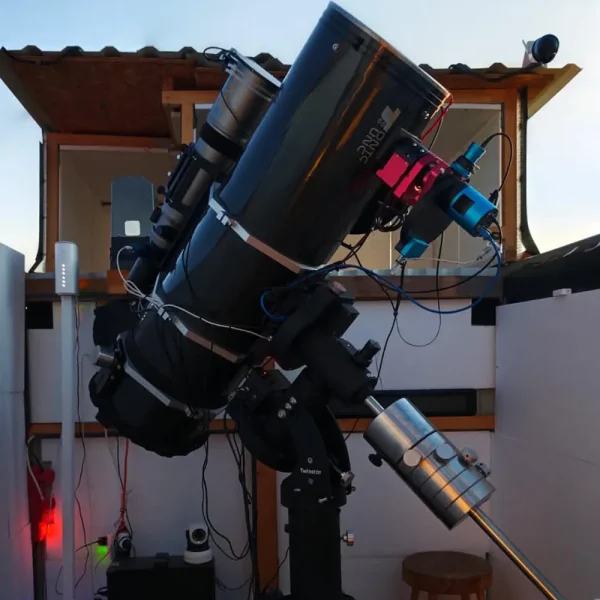
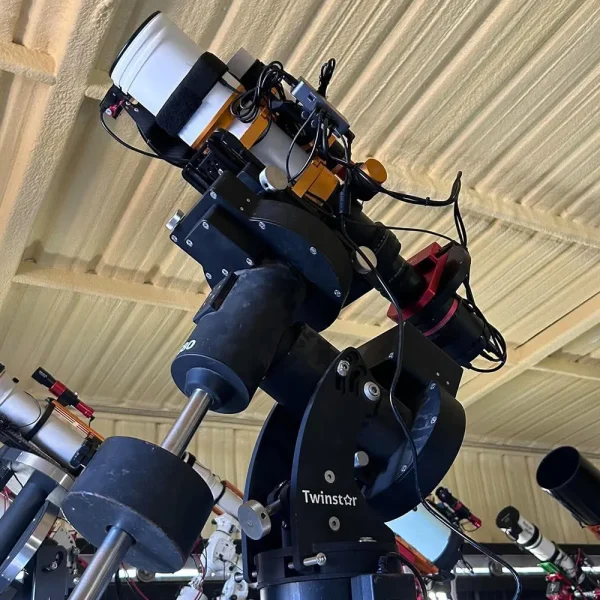
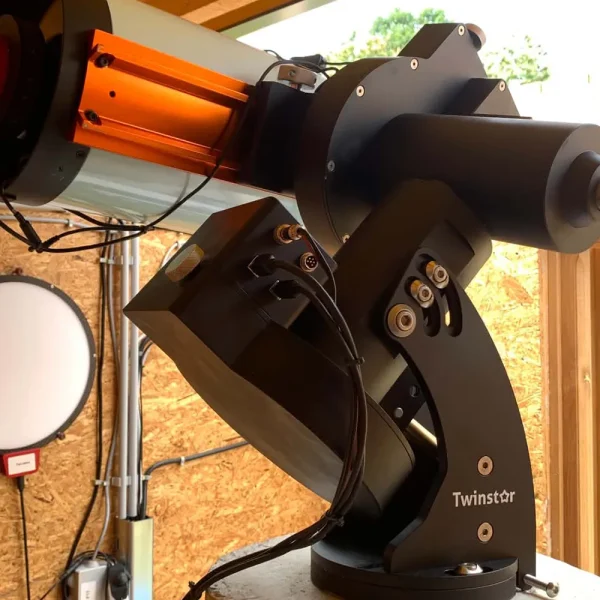
The Twinstar FG80 is a precision-engineered German equatorial mount designed for astrophotographers and observatories requiring high payload capacity, smooth tracking, and reliable long-term operation. With an 80 kg photographic payload capacity, the FG80 supports large optical systems, including Ritchey-Chrétien telescopes, Schmidt-Cassegrain telescopes, large refractors, and multi-telescope imaging configurations. Its friction drive technology eliminates conventional gear backlash and provides extremely smooth motion, making the FG80 particularly suitable for long-exposure deep-sky imaging and high-resolution astrophotography. The FG80 is designed and manufactured in Europe, combining precision machining, durable materials, and practical observatory experience.
Precision Friction Drive Technology
Smooth Tracking Without Gear Backlash
The FG80 uses a precision friction drive system instead of traditional worm gears. A small, accurately machined drive roller transfers motion directly to a larger friction disc. This provides a high mechanical reduction ratio without the gear teeth found in conventional equatorial mounts. The result is exceptionally smooth motion with no conventional gear backlash and very low drive-induced periodic error.
Advantages of the FG80 friction drive system:
- Backlash-free mechanical transmission
- Extremely smooth tracking corrections
- Minimal drive-induced periodic error
- High mechanical rigidity
- No conventional worm gear lubrication
- Reliable performance with fewer mechanical transmission components
Unlike many high-precision mounts that rely on expensive absolute encoders to compensate for mechanical imperfections, the FG80 achieves excellent tracking performance through its precision friction drive mechanism. For astrophotographers using autoguiding, this provides a highly responsive mechanical platform for accurate corrections.
80 kg Photographic Payload Capacity
Designed for Large Telescopes and Heavy Imaging Systems
The FG80 supports photographic payloads of up to 80 kg, making it suitable for demanding telescope configurations.
Typical applications include:
- Large Ritchey-Chrétien telescopes up to approximately 16 inches
- Large Schmidt-Cassegrain and other catadioptric telescopes
- Heavy apochromatic refractors
- Dual-telescope and multi-camera imaging systems
- Permanent private observatories
- University and scientific imaging installations
Actual imaging performance depends on the telescope’s physical dimensions, weight distribution, balance, mounting rigidity, and observing conditions.
With a mount head weighing approximately 21 kg, the FG80 offers substantial carrying capacity without the mass and complexity of many traditional heavy-duty equatorial mounts.
Sub-Arcsecond Tracking and Guiding Performance
Precision for Long-Exposure Astrophotography
Tracking accuracy is one of the most important characteristics of an astronomical mount. The FG80’s friction drive mechanism is designed to minimize mechanical tracking irregularities, allowing guiding software to make small, consistent corrections. Under suitable conditions, the FG80 can achieve guided tracking performance of approximately 0.5 arcsecond RMS or better. Actual guiding results depend on atmospheric seeing, polar alignment, telescope focal length, guiding equipment, mechanical rigidity, and system balance. The FG80 is particularly well suited for demanding long-focal-length imaging, where smooth tracking and predictable guiding corrections are essential. For the best results, we recommend using a properly configured autoguiding system, such as PHD2, and optimizing guiding exposure times for local atmospheric conditions.
Integrated USB 3.0 and 12V Power Distribution
Simplified Cable Management for Complex Imaging Systems
Modern astrophotography systems often require multiple USB connections and separate power supplies for cameras, focusers, filter wheels, dew heaters, and other accessories. The FG80 simplifies this with an integrated USB and DC distribution hub located directly in the telescope saddle.
Integrated connections:
- 7 × USB 3.0 ports
- 8 × 12V DC power outputs
- Up to 4A per DC output, within the available total power budget
- Internal routing of power and data cables through the mount
This allows imaging accessories to connect directly at the telescope rather than requiring separate external cable bundles. The benefits include cleaner installations, reduced cable movement, easier maintenance, and improved reliability during unattended imaging sessions.
Integrated Electronics and Observatory Control
Compatible with Modern Astrophotography Software
The FG80 features integrated control electronics and supports established computer-controlled astronomy workflows. Through its compatible ASCOM and EQMOD control interface, the mount can be used with popular applications including:
- N.I.N.A. – automated astrophotography and imaging sequences
- PHD2 Guiding – precision autoguiding
- Stellarium – telescope positioning and planetarium control
- Cartes du Ciel – astronomical object selection and GoTo control
- ZWO ASIAIR – supported imaging and telescope control workflows
This flexibility allows the FG80 to be integrated into both traditional PC-based observatories and more compact astrophotography setups. The FG80 can be operated through software for GoTo positioning, tracking, guiding, and observatory automation.
Integrated Homing Sensors
Repeatable Positioning for Automated Observatories
The FG80 includes integrated homing sensors that provide repeatable mechanical reference positions for the mount axes. Homing is particularly useful for permanent observatories, where the telescope may need to recover its reference position after an interruption or positioning error. The homing function establishes a known mechanical reference, while parking places the mount in a designated resting position. Together, these functions support more reliable observatory operation and simplify startup and shutdown procedures.
Robust Mechanical Construction
Engineered for Long-Term Observatory Use
The FG80 is built using precision-machined aluminum and stainless steel components. Its mechanical construction prioritizes rigidity, durability, and long-term reliability.
Construction highlights:
- Hard-anodized aluminum components
- Stainless steel mechanical parts
- Precision-machined friction drive surfaces
- Rigid equatorial mount structure
- Integrated electronics and cable routing
- Designed for permanent observatory installation
The FG80 is suitable for protected outdoor observatory environments, including fixed domes and roll-off roof observatories.
Designed for Remote and Automated Observatories
The combination of high payload capacity, precision friction drive technology, integrated homing sensors, and internal cable management makes the FG80 a strong choice for permanent observatory installations.
It is suitable for:
- Automated deep-sky astrophotography
- Long-focal-length imaging
- Remote telescope operation
- University astronomy projects
- Scientific and educational observatories
- Multi-telescope imaging configurations
The FG80 provides a stable mechanical foundation for modern observatory automation systems.
Why Choose the Twinstar FG80?
The FG80 combines the payload capacity of a heavy-duty equatorial mount with the precision and smoothness of friction drive technology. Its key advantage is the ability to support large astronomical instruments while minimizing the mechanical tracking irregularities associated with conventional gear-driven systems. With integrated power distribution, USB connectivity, homing sensors, and broad software compatibility, the FG80 is designed to simplify complex imaging installations.
Twinstar FG80 — Precision Friction Drive. 80 kg Payload. Built for Serious Astronomy.
Frequently Asked Questions
What is the Twinstar FG80?
The Twinstar FG80 is a precision friction drive German equatorial mount with an 80 kg photographic payload capacity, designed for advanced astrophotography and permanent observatories.
Does the FG80 require autoguiding?
Autoguiding is recommended for demanding long-exposure astrophotography, particularly at longer focal lengths.
Is the FG80 compatible with N.I.N.A. and PHD2?
Yes. The FG80 supports compatible ASCOM/EQMOD workflows, including N.I.N.A. and PHD2.
Can the FG80 support a 16-inch RC telescope?
Yes, provided the complete imaging system remains within the 80 kg payload capacity and is properly balanced.
Reviews
There are no reviews yet.