

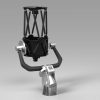
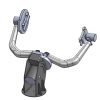
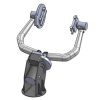
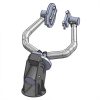
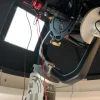
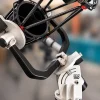


Twinstar Watusi150 – High-Capacity Equatorial Fork Mount
Precision Friction Drive for Large Observatory Telescopes
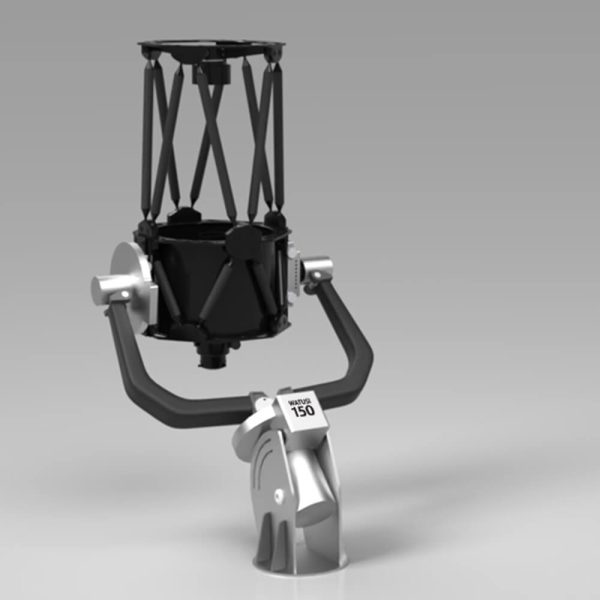
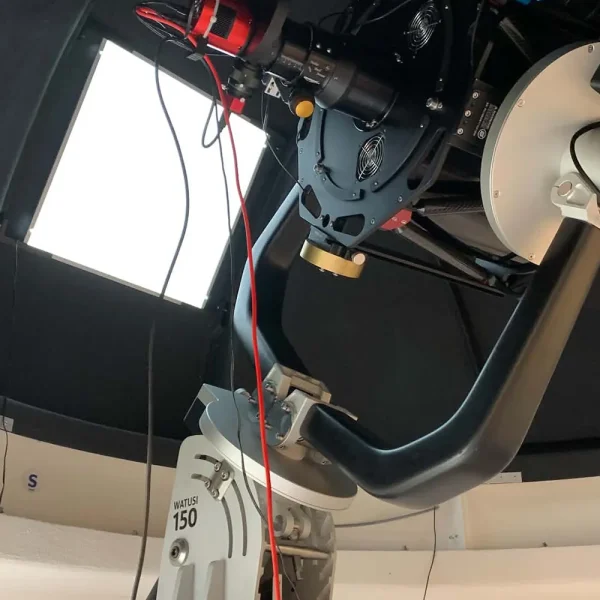
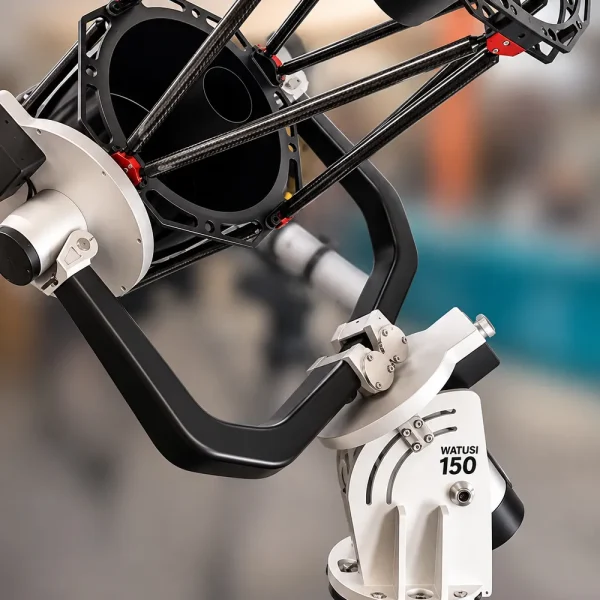
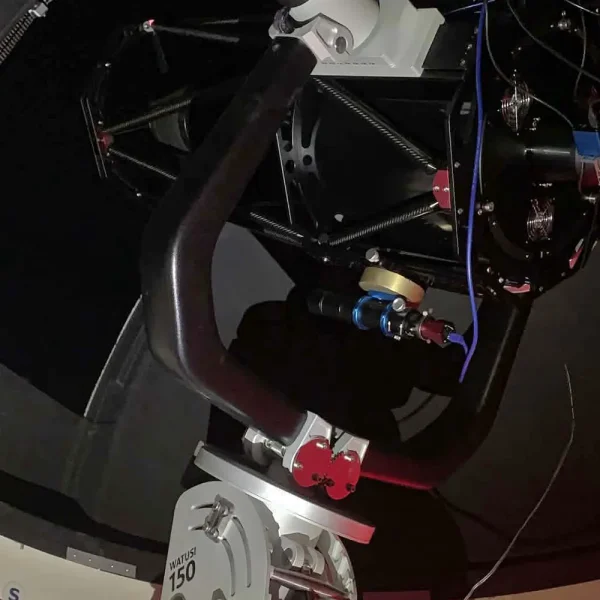
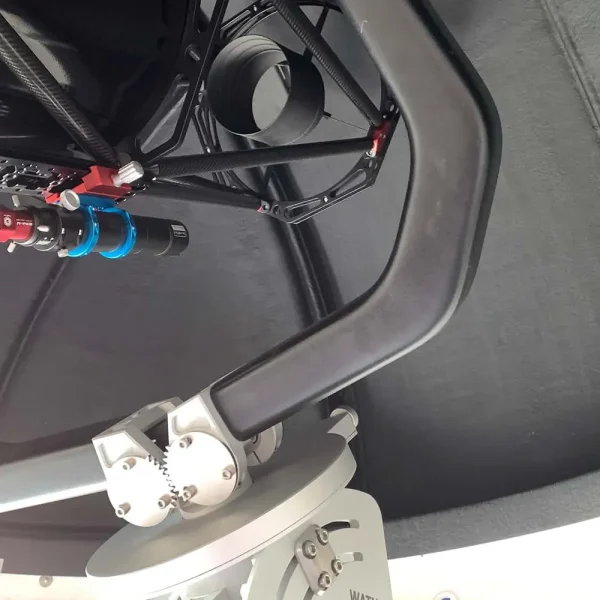
The Twinstar Watusi150 is a high-performance equatorial fork mount designed for demanding astrophotography, professional observatories, and scientific astronomical applications. With a 150 kg payload capacity, precision friction drive technology, and adjustable carbon-fiber fork arms, the Watusi150 provides a flexible mounting platform for large optical systems. Unlike conventional German equatorial mounts, the Watusi150 does not require a meridian flip during normal tracking. This allows imaging sessions to continue across the meridian without repositioning the telescope or interrupting an automated imaging sequence. Its modular construction accommodates different telescope configurations, making it suitable for large Ritchey-Chrétien telescopes, Schmidt-Cassegrain systems, CDK astrographs, and specialized multi-telescope installations. Designed and manufactured in Slovenia, Europe, the Watusi150 combines advanced mechanical engineering with practical experience in automated observatory operation.
Why Choose an Equatorial Fork Mount?
Uninterrupted Imaging Without Meridian Flips
One of the most significant advantages of an equatorial fork mount is the ability to track astronomical objects across the meridian without the meridian flip required by most German equatorial mounts. For long-exposure astrophotography, this can simplify automated imaging sequences and reduce interruptions during valuable observing time.
Key advantages include:
- No meridian flip during normal tracking
- No conventional counterweight shaft or counterweights
- Continuous imaging across the meridian
- No meridian-flip-related guide recalibration
- Consistent telescope orientation throughout the imaging session
- Convenient integration into permanent observatories
The Watusi150 is particularly attractive for remote observatories, where reducing mechanical movements and unnecessary interruptions can improve operational reliability. As with any large telescope installation, the full movement envelope must be checked to prevent collisions with observatory structures and accessories.
150 kg Payload Capacity
Engineered for Large Optical Systems
The Watusi150 is designed to support astronomical instruments with a total payload of up to 150 kg. Its rigid mechanical structure and adjustable fork geometry make it suitable for demanding telescope installations.
Typical applications include:
- Large Ritchey-Chrétien telescopes
- Schmidt-Cassegrain and Maksutov-Cassegrain systems
- Corrected Dall-Kirkham telescopes
- RASA and other fast astrographs
- Compact Newtonian telescopes
- Multi-telescope imaging configurations
- Scientific and educational observatories
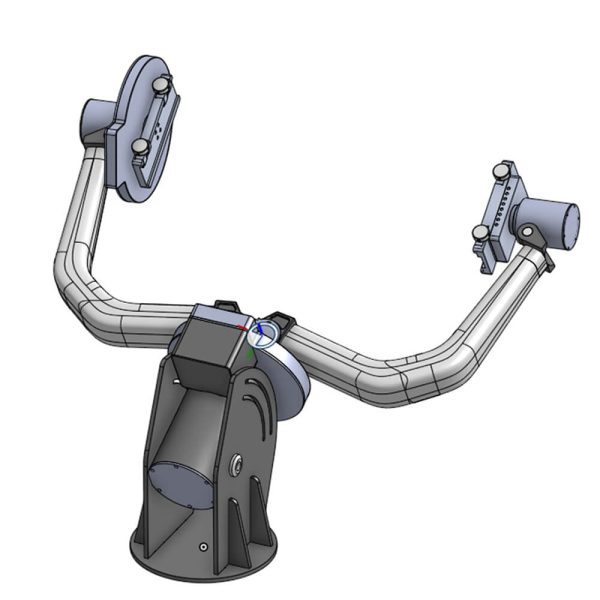
The adjustable fork arms accommodate a wide range of optical tube dimensions, with a published adjustment range of approximately 20–80 cm between mounting interfaces. Compatibility depends on the complete telescope geometry, physical dimensions, balance, accessory clearance, and mechanical configuration. Large refractors may be less suitable because of their length and the clearance requirements of a fork-mounted system.
Adjustable Carbon-Fiber Fork Arms
One Mount. Multiple Telescope Configurations.
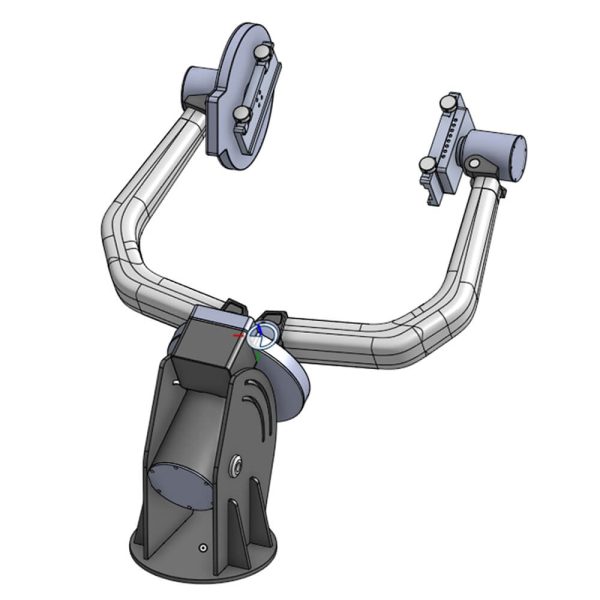
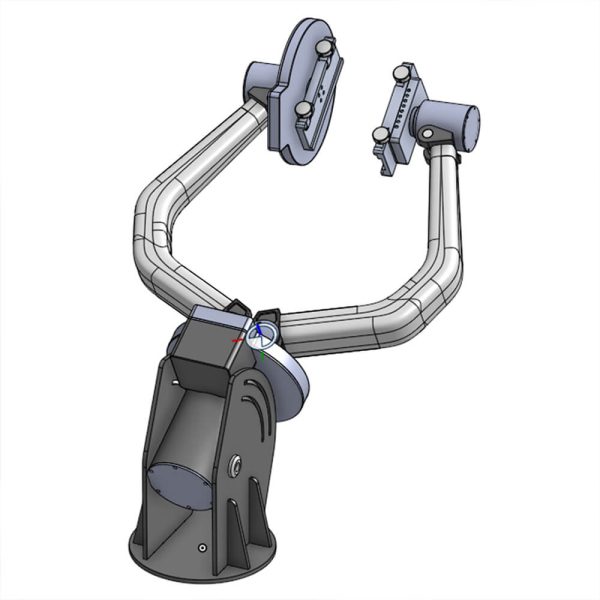
Traditional fork mounts are often designed around a specific telescope tube. The Watusi150 takes a different approach with adjustable carbon-fiber fork arms that allow the mounting geometry to be adapted to different optical systems. This modular design provides flexibility for observatories that may change telescopes or expand their imaging equipment over time.
Advantages of the adjustable fork system:
- Adaptable geometry for different telescope dimensions
- High structural stiffness
- Reduced structural weight through carbon-fiber construction
- Compatibility with various compact optical tube designs
- Support for specialized and multi-telescope configurations
- Custom configurations available upon request
The Watusi150 uses a Losmandy-compatible telescope mounting interface, simplifying integration with suitable optical tube assemblies.
Precision Friction Drive Technology
Smooth Tracking Without Conventional Gear Backlash
Both axes of the Watusi150 use Twinstar’s precision friction drive technology. Instead of conventional worm gears, the system transfers motion through accurately machined rollers acting directly on large drive discs. This eliminates conventional gear backlash and avoids the characteristic periodic error associated with worm gear transmission.
Key benefits:
- Backlash-free mechanical transmission
- Extremely smooth tracking motion
- Low drive-induced periodic error
- Responsive guiding corrections
- High mechanical rigidity
- No conventional worm gear lubrication required
- Precision tracking without mandatory absolute encoders
The friction drive system provides a stable mechanical foundation for long-exposure astrophotography, particularly with large and long-focal-length telescopes.
Sub-Arcsecond Tracking Performance
Designed for High-Resolution Astronomical Imaging
The Watusi150 friction drive system is engineered for exceptionally smooth tracking and high mechanical precision. Its design targets tracking performance at the sub-arcsecond level, with the published specification stating approximately ±0.5 arcsecond tracking precision under suitable conditions. Actual imaging and guiding performance depends on atmospheric seeing, polar alignment, telescope balance, structural rigidity, guiding equipment, and operating conditions. For demanding long-exposure imaging, autoguiding is recommended to compensate for residual tracking errors and environmental influences. High-resolution absolute encoder integration is also being developed for specialized configurations, with final specifications and availability subject to validation.
Integrated USB and 12V Power Distribution
Simplified Cabling for Complex Observatory Systems
Large observatory telescopes often require numerous power and data connections. The Watusi150 integrates USB and DC power distribution directly into the telescope mounting interface, reducing the need for external cable bundles.
Published connectivity includes:
- 7 × USB 3.0 ports
- 8 × 12V DC power outputs
- Up to 4A per DC output, within the total power budget
- Internal cable routing through the fork structure
- Dedicated USB connection for mount control
- Ethernet pass-through connectivity
Cameras, filter wheels, focusers, and other compatible imaging accessories can be connected near the telescope. This provides cleaner installations and reduces the risk of cable snagging during automated operation.
Integrated Electronics and Software Compatibility
Designed for Computer-Controlled Observatories
The Watusi150 incorporates its control electronics into the mount and supports established astronomical software workflows. Through compatible ASCOM control interfaces, the mount can be integrated with applications such as:
- N.I.N.A. – automated imaging sequences
- PHD2 Guiding – precision autoguiding
- Stellarium – telescope positioning and planetarium control
- Cartes du Ciel – astronomical object selection and GoTo
- Voyager – advanced observatory automation
- Other compatible astronomy control applications
This makes the Watusi150 suitable for remotely supervised and automated imaging installations. Additional control functionality and encoder-assisted features are under development.
Integrated Homing Sensors
Repeatable Position Recovery
The Watusi150 includes integrated homing sensors that provide repeatable mechanical reference positions for its axes. These sensors help establish a known mechanical orientation during initialization or position recovery. Homing is especially useful in remotely operated observatories, where reliable reference positioning reduces the need for manual intervention. The home position establishes a mechanical reference, while the park position defines a designated resting position for the telescope. Together, these functions support more predictable startup and shutdown procedures.
Modular Construction and Custom Configurations
Designed Around Your Observatory
The Watusi150 is based on a modular mechanical architecture that allows different telescope configurations and customization options. The standard version combines precision friction drive technology with adjustable carbon-fiber fork arms and integrated observatory connectivity. Custom configurations can be developed for specialized scientific instruments, unusual optical tube geometries, or advanced control requirements.
Customization options may include:
- Alternative fork dimensions
- Specialized telescope mounting interfaces
- Full aluminum electronics enclosures
- Custom observatory integration
- Planned high-resolution absolute encoders
- Application-specific mechanical adaptations
Custom configurations are evaluated individually according to telescope dimensions, payload distribution, and technical requirements.
Designed for Remote and Scientific Observatories
The Watusi150 is particularly suitable for permanent observatories requiring high payload capacity and reliable automated operation. Typical applications include:
- Long-exposure deep-sky astrophotography
- High-resolution galaxy and planetary nebula imaging
- University and educational observatories
- Scientific imaging and photometric research
- Asteroid observations
- Multi-telescope imaging installations
- Remotely operated astronomical facilities
The absence of meridian flips, combined with integrated cable management and homing sensors, helps simplify complex observatory workflows.
European Engineering and Manufacturing
Designed and Manufactured in Slovenia
The Watusi150 is developed and manufactured by Twinstar Technologies in Slovenia, Europe. Its construction combines precision-machined aluminum, stainless steel, and carbon-fiber components. The modular architecture emphasizes mechanical rigidity, practical maintenance, and adaptability to different telescope systems. The Watusi150 is supplied semi-assembled, with installation guidance and remote technical support available. Custom installation and commissioning services can be arranged upon request.
Why Choose the Twinstar Watusi150?
The Watusi150 combines the mechanical advantages of an equatorial fork mount with the precision of friction drive technology. Its 150 kg payload capacity, adjustable carbon-fiber arms, uninterrupted meridian tracking, and integrated observatory connectivity make it an attractive solution for demanding permanent installations. For observatories operating large telescopes, the Watusi150 offers an alternative to traditional heavy-duty German equatorial mounts, particularly where continuous tracking and flexible telescope integration are priorities.
Twinstar Watusi150 — High Capacity. Continuous Tracking. Precision Friction Drive.
Frequently Asked Questions
What is the Twinstar Watusi150?
The Twinstar Watusi150 is a high-capacity equatorial fork telescope mount with a 150 kg payload capacity, precision friction drive technology, and adjustable carbon-fiber fork arms. It is designed for large telescopes, astrophotography, and permanent observatories.
What are the advantages of a fork mount over a German equatorial mount?
An equatorial fork mount does not require a meridian flip during normal tracking and does not use a conventional counterweight shaft. This simplifies long imaging sessions and automated observatory operation.
Does the Watusi150 require a meridian flip?
No. The equatorial fork design allows continuous tracking across the meridian without the meridian flip typically required by German equatorial mounts, provided the telescope has sufficient mechanical clearance.
What is the payload capacity of the Watusi150?
The Watusi150 supports payloads of up to 150 kg. Actual compatibility depends on telescope dimensions, balance, weight distribution, and the complete mechanical configuration.
Which telescopes are compatible with the Watusi150?
The Watusi150 is suitable for many large Ritchey-Chrétien, Schmidt-Cassegrain, Maksutov-Cassegrain, CDK, RASA, and compact Newtonian telescope configurations. Custom installations and multi-telescope arrays can also be considered.
Can the Watusi150 accommodate different telescope sizes?
Yes. Its adjustable carbon-fiber fork arms provide a published mounting interface spacing range of approximately 20–80 cm. Telescope length, accessories, and clearance must also be considered.
What is the advantage of friction drive technology?
Friction drive uses precision rollers rather than conventional worm gears. This eliminates conventional gear backlash and provides smooth tracking with very low drive-induced periodic error.
Does the Watusi150 require autoguiding?
Autoguiding is recommended for demanding long-exposure astrophotography, particularly at long focal lengths. It helps correct residual tracking errors and alignment imperfections.
Is the Watusi150 compatible with N.I.N.A. and PHD2?
Yes. The Watusi150 supports compatible ASCOM-based workflows, including N.I.N.A. for imaging automation and PHD2 for autoguiding.
Does the Watusi150 have an integrated USB and power hub?
Yes. The Watusi150 features an integrated USB 3.0 and 12V DC distribution system, allowing compatible imaging accessories to connect near the telescope.
Does the Watusi150 include homing sensors?
Yes. Integrated homing sensors provide repeatable mechanical reference positions, supporting reliable startup and position recovery in automated observatories.
Are absolute encoders available for the Watusi150?
High-resolution absolute encoder integration is being developed for specialized configurations. Please contact Twinstar Technologies to confirm current availability, supported functionality, and compatibility.
Is the Watusi150 suitable for remote observatories?
Yes. Its equatorial fork geometry, integrated cable management, homing sensors, and computer-controlled operation make it particularly suitable for permanent and remote observatory installations.
Where is the Watusi150 manufactured?
The Watusi150 is designed and manufactured in Slovenia, European Union, by Twinstar Technologies.
Is the Watusi150 delivered fully assembled?
The Watusi150 is supplied semi-assembled. The fork arms must be attached during installation, and two people are recommended for safe assembly. Installation guidance and remote support are available.
Reviews
There are no reviews yet.